If you enter Kyushu through Fukuoka and explore the island by rental car, the final day matters more than you might expect. By then, the question is no longer how many places you can still squeeze into your itinerary, but rather where you want the journey to finally come to rest.
I have always been the kind of traveler who feels most comfortable standing half a step back, quietly observing. In unfamiliar places, that slight distance helps me notice more. A rental car suited me perfectly for that reason. It was not only a practical way to navigate between rural towns, but also a private sanctuary that allowed me to slow down, sit with my thoughts, and stop whenever a landscape quietly asked to be noticed.
While I could have driven straight back to the bustling crowds of Fukuoka Airport, the accumulated fatigue of several days on the road whispered a different suggestion. I realized that what I needed most was not one more tourist attraction, but a place to rest well. So, instead of ending my trip in the city, I let it taper off quietly in the small towns and mountain roads of Kyushu, finding solace in local food, a roadside market, and one final night at a ryokan in Kurokawa Onsen.
A Closer Look at Everyday Kyushu: Local Markets
The longer a road trip goes on, the easier it is for meals to become purely functional—you eat because you have to, and then you move on. But somewhere along the road, a serendipitous stop at a local provincial supermarket reminded me that food can be one of the most intimate ways to understand a place.
Inside the store was a Nōka no Chokubaijo (Farmers’ Direct Sales) corner. Local growers displayed their produce under their own names and photographs. The vegetables were not styled or polished for tourists. They were simply fresh, seasonal, and neatly arranged with the kind of quiet confidence that comes from daily life rather than performance.

The farmers' market corner. A quiet glimpse into the region's daily harvest.I picked up a bag of Ikiriki mandarins from Nagasaki Prefecture and kept them on the passenger seat for the rest of the drive. Every now and then, at a red light or after pulling over, I peeled one and let the sweet, earthy citrus scent fill the car. The skin was remarkably thin, the fruit bursting with juice, and for a fleeting moment, the road no longer felt tiring.

Sweet local mandarins from Nagasaki. The perfect companion for a long drive.- Road Trip Tip: When driving through Kyushu, visit roadside supermarkets and Michi-no-Eki. These rest areas offer authentic snacks and seasonal fruit. In fact, they are often far more rewarding and affordable than standard souvenir shops.
Warm Udon and Simple Comforts on the Road
The food I remember most vividly from this trip was not elaborate. It was the kind of honest, deeply comforting fare that eased the body first and the heart a little later.
A bowl of udon at a local branch of Marugame Seimen did exactly that. In Japan, these casual noodle shops feature an open kitchen. Trays of golden tempura line up in front. As a result, you can easily choose your favorites one by one. There was something profoundly comforting about that rhythm: order, wait a moment, carry your tray, sit down, breathe.

Fresh tempura at a casual udon shop. The rhythmic, open kitchen offers immediate comfort to a weary driver.The savory broth warmed me before I even fully realized how tense my shoulders had become. On the table sat a red tin of shichimi (a Japanese seven-spice blend). I sprinkled a little into the soup, and that small burst of heat made the whole bowl feel even more restorative.

Shichimi adds a gentle, revitalizing heat to warm broth.Sometimes, the best meals are the lightest ones. Later, I spent a quiet evening at a neighborhood izakaya. I ordered a cold draft beer and a few small plates. In particular, I remember the atsuage, which is thick fried tofu. It had a crisp exterior and a soft center. Topped with ginger and bonito flakes, it was light, savory, and comforting.

A light and easy izakaya supper. Uncomplicated food is best when you are tired.
Atsuage with ginger and bonito flakes. Mild, soothing, and perfectly balanced.When the Landscape Slows Down: Arriving at Kurokawa Onsen
As I drove past the volcanic landscapes of the Kumamoto and Aso regions and into Kurokawa Onsen, the scenery outside the window seemed to soften. The roads narrowed, the mountain air felt crisper, and the pace of the day loosened almost without my noticing.
I carried my bag down the path to the ryokan. At that moment, my mind shifted away from sightseeing. I felt completely ready for absolute rest. Low lanterns glowed amber between the trees. The ground, still wet from rain, reflected a muted, peaceful light. It was quiet in a way city hotels rarely are—less polished, perhaps, but far more soothing.

The peaceful approach to a ryokan in Kurokawa Onsen. Arriving at dusk allows you to fully absorb the woodland atmosphere.After check-in, there was nowhere else I needed to go. That was the beauty of it. The ryokan was not just a place to sleep; it was the final destination itself.
- Accommodation Tip: Are you flying out of Fukuoka after a Kyushu road trip? Consider spending your last night at an onsen ryokan instead of a city hotel. Consequently, you will leave with a much more peaceful impression of your journey.
A Kaiseki Dinner That Teaches You to Slow Down
What stayed with me most about the ryokan’s kaiseki dinner was not the abundance of food, but the rhythm of the meal.
When I first sat down, the table looked almost sparse. A large ceramic plate held a few carefully arranged starters with enough empty space around them to make each bite feel deliberate. Instead of overwhelming the table all at once, the courses arrived gradually, almost as if the meal was teaching me how slowly the evening was meant to unfold.

The opening course of the ryokan dinner. The delicate use of negative space sets a calm, deliberate tone.
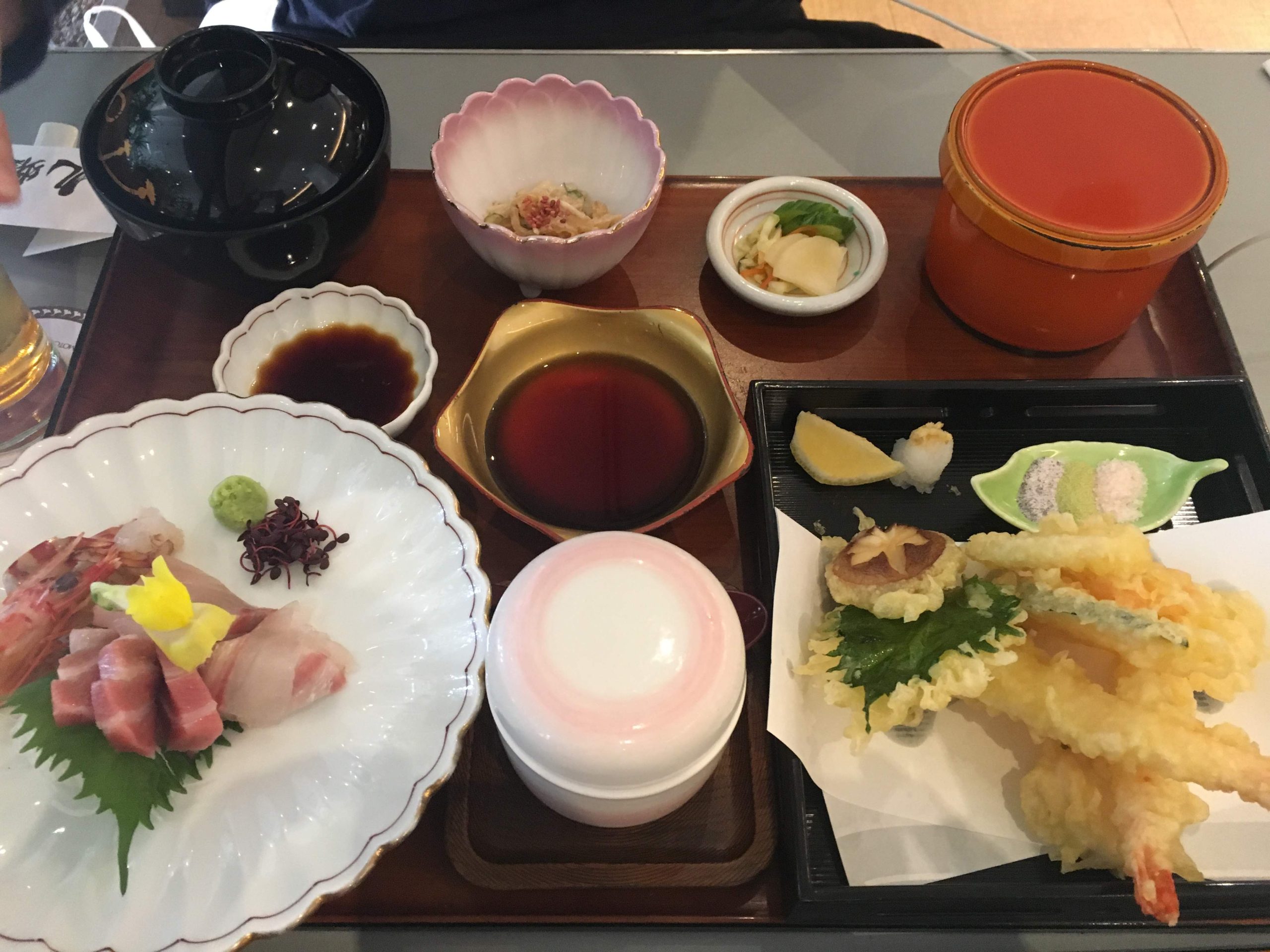
Kaiseki begins with quiet detail, encouraging you to eat slowly and mindfully.Soon, fresh sashimi and delicately fried tempura followed. The contrast between the cool, delicate slices of fish and the crisp lightness of the fried course kept the meal perfectly balanced. Even though I had arrived hungry, the hush of the tatami room made me slow down naturally.

Sashimi and tempura in the evening course. The textural contrast highlights the meticulous balance of a ryokan dinner.To accompany the meal, I ordered a local craft beer called Yuagari Bijin, which roughly translates to “Beauty After a Bath”—a charming name for a drink in an onsen town. Its slightly bitter finish and gentle aroma matched the calm mood of the evening flawlessly.

Yuagari Bijin, a local craft beer from Kurokawa Onsen. A perfect, aromatic pairing for the meal.The Breakfast That Told Me the Trip Was Over
Sometimes, a ryokan reveals its true charm not at dinner, but the next morning.
Breakfast was quieter, simpler, and somehow even more grounding. Small side dishes were arranged in wooden compartments: grilled fish, a rolled tamagoyaki omelet, pickles, warm rice, and miso soup. Nothing was flashy. Nothing needed to be. It was the kind of meal that settles you rather than surprises you.

A grounding, traditional ryokan breakfast.
Simple, perfectly portioned dishes that settle the stomach before a long journey home.And perhaps that was why it felt so final. The night before, I had still been trying to hold on to the trip. But over this breakfast, sip by sip and bite by bite, I could feel myself quietly accepting that it was time to return.
Final Reflections on a Quiet Journey
In the end, I do not remember one grand sight. Instead, I remember small, delicate details. I recall mandarins on the passenger seat and steam rising from warm udon. Moreover, the lantern-lit path and slow meals in Kurokawa Onsen left a lasting impression.
As someone who experiences the world first through the lens of a camera and then through quiet reflection, moments like these are why I travel. Which part of this peaceful Kyushu escape resonates with you the most? I’d love to hear your thoughts in the comments below. If you enjoyed this slower pace of travel, I warmly invite you to explore the other photo essays and quiet reflections scattered throughout this blog.
Before arriving in Kurokawa Onsen, I had been driving through the volcanic landscapes of Aso, which made this quieter final stop feel even more restorative in my Aso road trip guide.
If you are planning this route from the beginning, my full Kyushu road trip itinerary shows how Kurokawa Onsen became the calm final chapter after Nagasaki, Kumamoto, and Aso.
This peaceful ending felt even more meaningful because the journey had begun with a much lighter first stop in my Nagasaki half-day itinerary from Fukuoka by rental car.

Leave a Reply