When I arrived in Fukuoka, picked up a rental car, and slowly made my way south through the historic streets of Nagasaki and Kumamoto, I knew I wanted to dedicate the third and fourth days of my journey entirely to the Aso region. What I sought was not simply a rushed checklist of famous viewpoints, but a route that would let the landscape unfold in a natural, emotional order.
Aso is one of those rare places that becomes infinitely more rewarding when you have the quiet sanctuary of your own car. If you want to go beyond a single panoramic stop and weave together Daikanbo, the active volcanic crater of Kusasenri, and the gentle, water-lined streets of Aso Shrine, this is the route that made the most sense to me.
The Aso I met was not the vibrant, postcard-perfect green version you often see in brochures. It was painted in winter colors, brushed by biting wind and rain, beneath low-hanging clouds and resting on damp earth. Yet, perhaps because of that moody, melancholic atmosphere, it remains entirely vivid in my memory.
Daikanbo: The First Place That Opens the View
The first stop that truly made me breathe deeper was Daikanbo (Daikan Peak), arguably the best vantage point for grasping the sheer, staggering scale of the Aso caldera. As the winding road climbed higher and higher, the landscape slowly widened. By the time I stepped out of the car into the chill, the vast basin was already spread beneath a heavy sky.

The colors were not crisp in the way they might be on a clear, sunlit day, but the overcast sky gave the land a quieter, more solemn depth. The layered mountain ridges looked calm, fading gently into the mist. The wind was relentless, forcing the pale silver pampas grass to bend sharply in one direction. Even the few other travelers who had braved the weather seemed unable to linger, moving slowly with umbrellas tightly in hand. It felt less like a standard sightseeing stop and more like standing at the very edge of an enormous geological memory.

After reading the viewpoint’s information board, the land physically changed in my mind. This was no longer just an open plain. It was the direct result of massive, ancient eruptions—a caldera shaped over immense stretches of time, with today’s quiet roads, villages, and lives unfolding fragilely inside it.
- Travel Tip: If you want to understand Aso’s true scale, make Daikanbo your absolute first stop. It gives the entire rest of your drive a much stronger sense of geographical and emotional order.
Kusasenri and the Crater Area: Land That Smells Alive
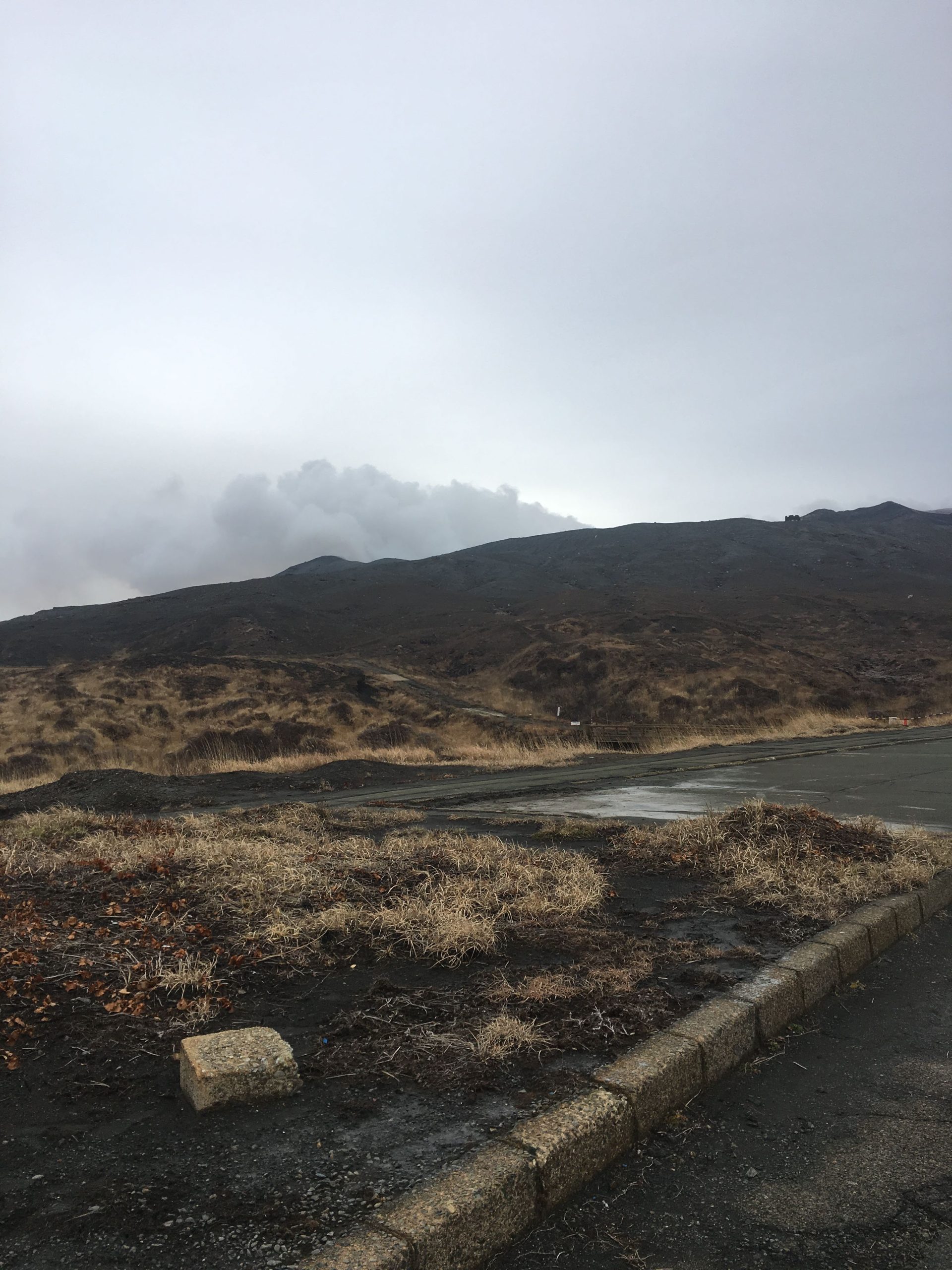
After absorbing the macro view from Daikanbo, the most natural next step is to descend toward the Kusasenri plateau and the active volcanic crater. The shift in scenery is immediate and dramatic. The soft, dried grasslands abruptly give way to black volcanic slopes, and the land begins to look harsher, stripped back, and deeply elemental.

Seen from above, the landscape felt even larger than I had anticipated. The long, neat lines of the parking area, the rolling withered grassland beyond it, and the dark, jagged volcanic ridge farther back all appeared in a single, staggering frame. The first impression was not of beauty in a decorative sense, but of sheer, undeniable power. The land felt far larger than the tiny people moving through it.

The moment I stepped out of the car, the scent of wet earth hit me first. Then came the wind, sharp enough to chill my fingertips almost instantly. What had looked somewhat bleak in photographs felt strangely vivid and pulsing in person: black soil darkened by the rain, flattened winter grass, and a thick plume of white smoke rising steadily in the distance. Rather than feeling pretty, it felt alive. It is the kind of landscape that reminds you the ground beneath your feet is still active, still breathing, and still shaping itself.
- Travel Tip: When deciding on your second stop after Daikanbo, pair Kusasenri and the crater area in one continuous route. The drive between them is short, keeping your navigational flow simple and immersive.
Aso Is Not Only Fire: It Is Water Too
One of the most memorable details of this trip actually happened indoors. I paused to look at a museum-style display explaining how Aso’s porous volcanic layers hold rainwater deep underground, which later reappears as crystal-clear natural springs throughout the region.

It was such a simple, beautiful concept, yet it entirely changed the way I saw the rest of my journey. The volcano had not only created black ridges and smoking craters; it had also birthed the pristine waterways that have sustained daily village life for generations. That single detail made my next stop feel profoundly meaningful.
Walking Around Aso Shrine and the Spring-Fed Streets
On the fourth day, I deliberately slowed my pace to explore the area around Aso Shrine. Beyond the massive, silent wooden torii gate, the mountain sat faintly in the background, wrapped in a soft cloud. Just a little farther into the neighborhood, the Monzenmachi (traditional shopping street) revealed small, spring-fed water spots tucked beside shopfronts and narrow lanes.

Compared to the raw, aggressive expression of the crater area, this part of Aso felt incredibly grounded, gentle, and quiet. Water trickled softly from bamboo pipes and simple stone spouts. Vibrant green moss clung to the damp stone edges. In one narrow, clear basin, bright red goldfish moved lazily beneath the surface. None of it was dramatic or flashy, yet I found myself lingering here far longer than expected. After the harsh volcanic scenery of the previous day, these modest, murmuring waterways felt like the softer, healing half of the exact same story.

- Travel Tip: Do not just drive straight through this neighborhood. Park at the public lot near Aso Shrine and walk slowly for at least 30 minutes. The nostalgic atmosphere of the town reveals itself best at a walking pace.
The Strange Garden That Stayed in My Memory
Aso also gifted me something wonderfully unexpected: a curious garden of massive plant-shaped sculptures standing alone in a field on the edge of town.

They stood under the gray sky like half-finished myths—some looking like local wildlife, others like warriors from an old folktale, all meticulously shaped from shrubs. On a bright, sunny day, they might have looked purely playful or even slightly absurd. But beneath the muted, brooding weather, they somehow felt perfectly at home, adding a touch of surrealism to the landscape. That small, impulse detour reminded me exactly why I love road trips. A rental car doesn’t just ferry you from one famous landmark to another; it grants you the freedom to pause for the strange, the quiet, and the easily missed.
If you are planning a 1-night, 2-day itinerary in Aso, I strongly recommend linking these three core experiences together: witness the scale of the land at Daikanbo, feel the raw force of the earth around Kusasenri, and find peace in the gentle flow of water at Aso Shrine. Seeing only one of them would be impressive, but experiencing all three creates a narrative that stays with you much longer.
After the rough wind, the charred volcanic slopes, and the biting cold air, I found my body craving warmth and absolute stillness. The drive out of town led me away from the open caldera and deep into a dense, darkening forest, where the mood of the trip shifted completely once again.
When I arrived at my secluded ryokan (traditional inn) hidden among the trees, the aggressive wind was replaced by the soft rustling of leaves. Slipping into the silky, restorative hot spring waters, and later sitting down to a meticulously prepared, clean meal that honored the pure flavors of local ingredients, I felt the journey’s tension finally melt away. Those quiet evening hours in the deep woods, and the restorative food I found along the way, deserve a story all their own in my next post.
As always, my camera is my quietest and most faithful travel companion. If you enjoyed the moody, wintery atmosphere of these photos, I would be so happy to hear which specific landscape or moment lingered most for you in the comments below. And please, take your time to explore the other travel essays and photo stories gathered here.
Before reaching these open volcanic landscapes, I spent time in the city at Kumamoto Castle, which gave the road trip a much heavier and more reflective middle chapter.
After the wind, smoke, and wide caldera views of Aso, Kurokawa Onsen felt like the natural place to let the trip slow down and finally come to rest.
If you want to see how this dramatic stretch fits into the whole drive, my full Kyushu road trip itinerary connects Nagasaki, Kumamoto, Aso, and Kurokawa in one route.

Leave a Reply