A Calm First Afternoon in Nagasaki
I picked up my rental car at Fukuoka Airport and drove straight to Nagasaki, the first stop on a longer Kyushu journey that would continue through Kumamoto and Aso. For the first day, I did not want to do too much. I wanted an easy start: one convenient parking spot, a walkable route, and enough time to take in the city without rushing.
That plan worked better than I expected.
Instead of filling the afternoon with too many stops, I kept it simple. I parked near the harbor, then explored Nagasaki on foot—starting with the rooftop of an art museum, continuing to the quiet grounds of Kofukuji Temple, then moving through the lively streets of Shinchi Chinatown, a historic castella bakery, and finally the retro backstreets of Maruyama.
If you are driving from Fukuoka and want a gentle first-day route in Nagasaki, this is an easy and rewarding way to begin. You can park once, walk slowly, and see several different sides of the city in just half a day.
Start with the Harbor: Nagasaki Prefectural Art Museum
The drive from Fukuoka to Nagasaki took about two hours on the expressway. Since it was my first time driving on unfamiliar roads in Japan, I felt a little tense at first. What mattered most was not the driving itself, but staying alert for highway splits and exits. The built-in car navigation worked well, but I found Google Maps voice guidance even more reassuring, especially when it came to lane changes.
As soon as I arrived in Nagasaki, I parked at a public lot near the Nagasaki Prefectural Art Museum. It was a practical choice from the start. The lot was spacious, and it connected easily to the waterfront park, making it an ideal place to leave the car and begin exploring on foot.
Walking tip: parking near the Nagasaki Prefectural Art Museum makes it easy to combine the harbor area and downtown stops without moving your car again.

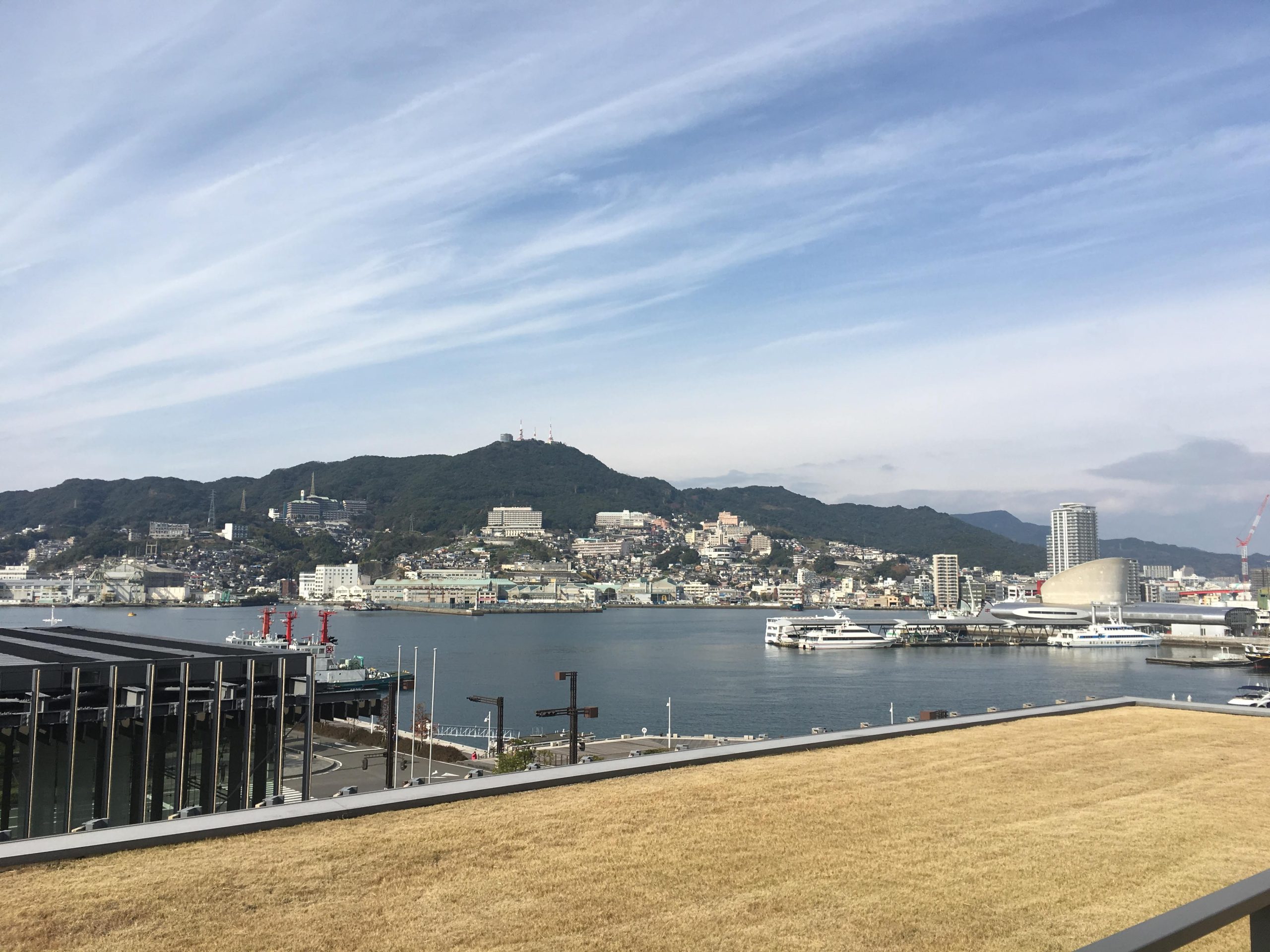
The museum is worth visiting even if you do not go inside for the exhibitions. Its rooftop garden is open to the public and offers a wide view of the harbor, with docked ships in the water and tightly packed houses climbing the hills behind them. The sea was beautiful, of course, but what stayed with me most was the sight of the hillside neighborhoods. Nagasaki immediately felt like a city shaped by slopes and layers rather than broad, flat streets.
It was my first real impression of the city, and it felt like a good one.
A Red Gate and a Quieter Mood: Kofukuji Temple
From the museum, I walked about fifteen minutes toward the Chinatown area, then made a small detour to Kofukuji Temple. I liked that shift in direction. The walk itself was part of the pleasure, especially as the streets narrowed and the atmosphere gradually changed.
Then the red gate appeared.
It filled the view so suddenly that the mood of the afternoon seemed to change at once. Just moments earlier I had been walking through an open harbor district, but here the air felt quieter and more enclosed. Kofukuji is a Zen temple with historical ties to Chinese merchants who lived in Nagasaki in the seventeenth century, and that influence still shows in its architecture.

Inside, the grounds felt calm rather than grand. The stone guardian lions near the gate were striking, but beyond them the space was unexpectedly peaceful. What I liked most here was not just the temple itself, but the contrast. The museum area had felt open and breezy. Kofukuji made me slow down and lower my pace without even thinking about it.
If you are heading toward a busier part of the city, this is a very good stop beforehand. It gives the route a quieter middle point and adds another layer to the walk.
From Chinatown to Fukusaya Castella
A short walk later, the atmosphere changed again as I arrived at Shinchi Chinatown. Red gates, restaurant fronts, and small groups of people waiting for food brought a different kind of energy to the afternoon. Compared with the quiet stillness of Kofukuji, this area felt lively and social.

There were lines outside champon restaurants, and people walked by holding freshly steamed buns in their hands. Even if you are not planning to stop for a full meal, the area is worth passing through for the change in mood alone.
In our case, we skipped the heavier food and headed instead to Fukusaya, one of Nagasaki’s best-known castella shops. Castella is a soft sponge cake with a long history in Nagasaki, and Fukusaya has been making it since 1624.

The exterior was simple and old-fashioned in a way I liked immediately. A wooden signboard and traditional noren curtain gave the shop a quiet confidence. It did not need to call attention to itself.
Inside, the castella was arranged neatly in different sizes. For travelers, the most practical choice is the Fukusaya Cube, a small box containing two slices. Larger cakes may be tempting, but the smaller boxes are easier to carry, easier to gift, and easy to enjoy later with coffee during the trip.

If you are walking this route, Fukusaya is an easy stop to add without making the itinerary feel heavy.
Maruyama and the Backstreets That Lingered Longest
After buying the castella, I walked a little farther into Maruyama. This part of the afternoon slowed down naturally. The polished tourist atmosphere faded, and the streets began to feel more lived-in. It was less about sightseeing and more about noticing small details.

The first thing that caught my eye was an unusual stone police box with a Western-style exterior. It stood out, but it also felt strangely at home in the neighborhood. Around it were older storefronts, modest sushi signs, and local shops that seemed to belong entirely to the daily rhythm of the area.

One small pub entrance stopped me completely. It had a playful raised sign and a short staircase lined with faded blue tiles. It was not a polished landmark or a carefully designed photo spot. That was exactly why it stayed with me. It felt like the kind of detail that gives a city its real texture.
Sometimes, those ordinary corners last longer in memory than the official attractions.
Why This Route Works Well for a First Day
What I liked most about this half-day in Nagasaki was how balanced it felt. The route moved naturally from one atmosphere to another without becoming tiring.
- A wide harbor view after the drive
- A quiet temple stop before the crowds
- A lively Chinatown section in the middle
- A practical local food stop for castella
- A final walk through older backstreets that felt personal and unpolished
All of it came from one parking stop and one easy walk.
The harbor breeze, the red gate at Kofukuji, the small castella box in my bag, and the blue-tiled steps in Maruyama—those were the details I carried with me when I left for Kumamoto the next day. As the beginning of a Kyushu road trip, it felt calm, manageable, and quietly memorable.
I always find myself returning to places like this through photographs, so if one part of this walk stood out to you, I would love to hear about it. And if you enjoy quiet travel stories and photo-led essays, I hope you will keep exploring more on the site.
This was the first stop on my longer Kyushu road trip itinerary, which later continued through Kumamoto, Aso, and Kurokawa Onsen at a much slower pace.
After this calm first afternoon in Nagasaki, I continued east to Kumamoto, where the mood of the trip shifted in a quieter and heavier direction at Kumamoto Castle.

Leave a Reply