Leaving the Steppe Behind
The rhythmic jolting of the unpaved dirt road finally surrendered. For days, the only soundtrack had been the relentless howling of the wild Mongolian wind whipping past my ears. Now, a chaotic, modern symphony rushed through the car windows—the sharp blast of car horns, the heavy friction of tires gripping fresh asphalt, and the low hum of city traffic. The endless, flat horizon I had grown so intimately accustomed to was instantly swallowed by a jagged skyline of vertical concrete and glass.
I had returned to Ulaanbaatar. The transition is always jarring for a quiet traveler like me; stepping from the profound silence of the wilderness back into the pulsating heart of a capital city requires a moment to simply catch your breath.
After dropping my dust-covered backpack at my guesthouse, my first instinct was to seek out open space, needing to bridge the gap between the nomadic world and the urban one.
Sukhbaatar Square: Where the Sky Meets the City
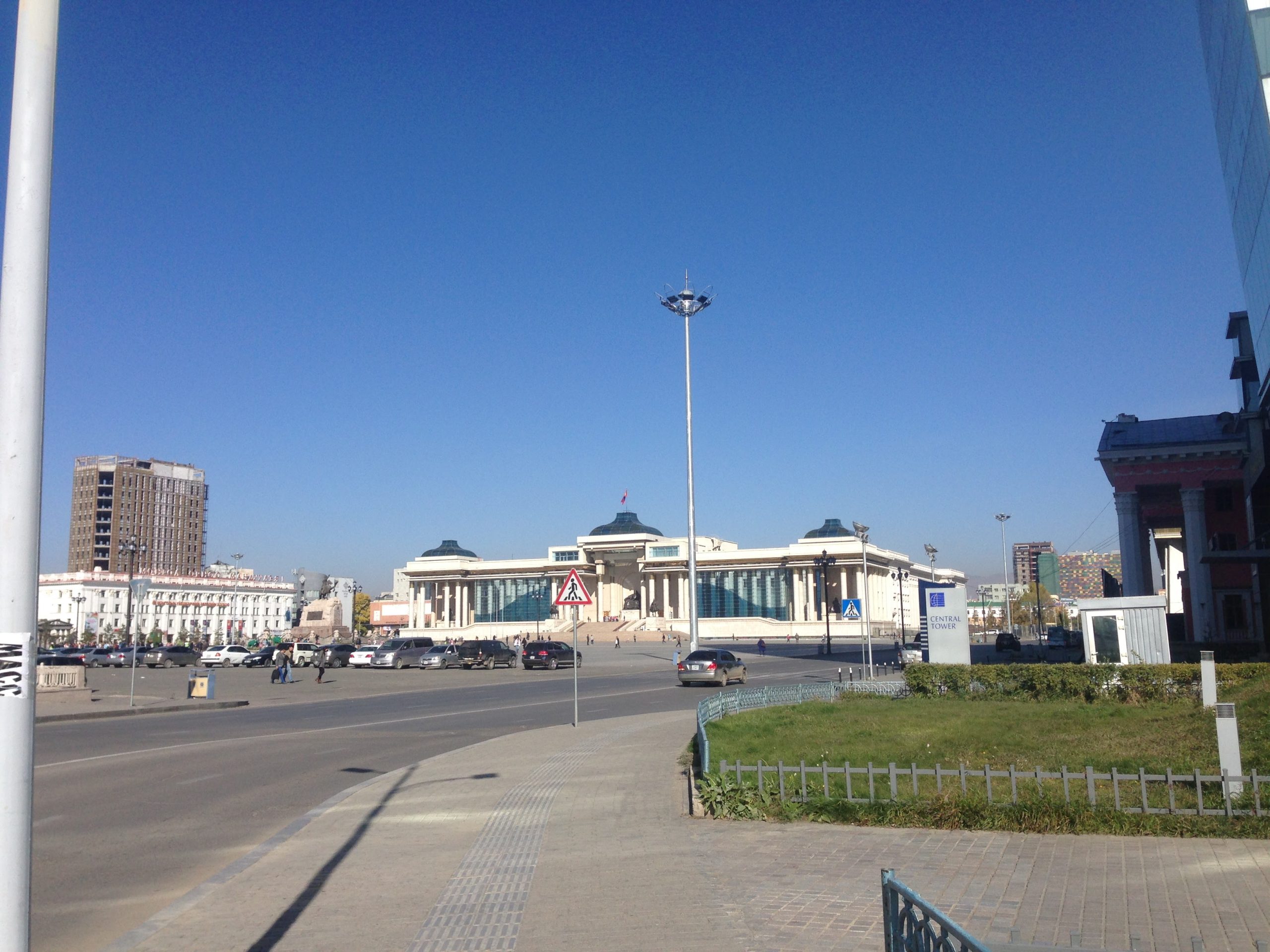
Late September in Mongolia is wonderfully deceiving. The sun might beat down with brilliant clarity, but the autumn air carries a distinct, icy bite. Pulling the collar of my heavy coat tight against the chill, I found myself standing in the center of the city’s vast main plaza.

Above me stretched a piercing, flawless canopy of blue. It was the exact same untamed sky I had slept beneath on the steppe, now draped quietly over a bustling metropolis.
All around me, people moved with the urgent rhythm of city life. Yet, wrapped in the thick coats of locals, I found myself walking at a lingering, deliberate pace.
Perhaps the unhurried, gentle movements of the sheep and horses I had watched for days were still deeply embedded in my bones. The sheer scale of the square offered an overwhelming feeling, but it was a completely different kind of vastness than the liberating emptiness of the plains.
Echoes of the Past: The Choijin Lama Temple Museum
Wandering away from the main thoroughfares, I traced the edge of a timeworn, red-brick wall that felt as though it had deliberately stopped the clock. If you look up, Ulaanbaatar offers a deeply fascinating visual paradox. Right behind the gracefully sloping, peeling eaves of an ancient temple, a sleek, modern glass skyscraper shoots upward, piercing the sky.

Stepping just a few feet past the outer wall, the relentless hum of the city abruptly faded. Inside the grounds of the Choijin Lama Temple Museum, there exists a profound stillness that forces you to forget you are standing in the very center of Mongolia’s capital.
The traditional painted woodwork—what Koreans would liken to dancheong—was beautifully faded by centuries of harsh weather. For a traveler who finds solace in quiet, imperfect things, this weathered authenticity was deeply comforting. The towering glass buildings outside cast long, cool shadows across the temple courtyard, making it look as though history itself was taking a quiet rest in the shade of the present.
I stood for a long time studying the intricate reliefs carved into the temple walls. Dragons, clouds, and mythical shapes tangled together in a rough, unpolished beauty. I traced the uneven textures with my eyes. After days of staring at the smooth, frictionless glass of a smartphone screen, facing these rugged, tactile traces of human devotion made the reality of my journey’s end suddenly feel very real.

The Wind Turned to Melody: A Street Encounter
It was then that I heard it—a deep, guttural vibration echoing through the alleyway. It was the unmistakable, weeping resonance of the Morin Khuur, the traditional Mongolian horsehead fiddle.
Following the sound, I found a man sitting casually on a wooden bench in front of a red-brick building. He wasn’t wearing traditional garments for a tourist show; he was clad in a thick, utilitarian sweater and a simple fedora, bowing the strings with an effortless, melancholic grace. Right behind him hung a bright red, commercial ‘RESTAURANT’ sign, and next to his feet sat a small metal rack of hand-burned CDs for sale.

It was an entirely contradictory scene—commercial signage, homemade merchandise, and the ancient sound of the nomadic plains. Yet, in the midst of this disjointed combination, the music was impossibly deep. It is hard to believe such a vast, wind-swept sound can come from just two strings. For a few minutes, that rough, earthy melody completely erased the city noise around us.
I sat quietly at the far edge of his bench until the song ended. It felt as though the steppe wind, which had been my constant companion for the last week, had transformed into an instrument just to bid me a proper farewell.
Final Farewells
When I finally returned to the main square, the afternoon crowds had swelled. Schoolchildren on field trips and camera-toting tourists mingled in a gentle, humming chaos. High above it all, the grand equestrian statue of Damdin Sukhbaatar looked down upon the crossing paths of locals and wanderers.

It was time to go home. I realized there was likely still a light coating of fine Mongolian dust hiding deep in the pockets of my coat. I decided right then that I wouldn’t brush it out before boarding my flight. Even as I walked toward the taxi, surrounded by the rush of the city, I closed my eyes and could still hear the deep, lingering cry of the horsehead fiddle.
The Timid Traveler’s Guide to Ulaanbaatar (Late September)
Whether you are transitioning back to city life or just beginning your Mongolian adventure, here are a few practical tips for navigating the capital:
Getting Around
- Tour Drop-offs: Most countryside tours will gladly drop you off directly in central Ulaanbaatar. Take advantage of this for a seamless transition!
- Walkability: The central downtown area (around the main square and museums) is highly walkable and perfect for a slow afternoon stroll.
- Use UBCab: Skip the anxiety of haggling with street taxis. Download the UBCab app—it operates just like Uber and provides safe, accurate, and stress-free rides.
Where to Find Quiet Reflection
- Choijin Lama Temple Museum: A beautifully preserved, quiet refuge hidden right in the middle of a concrete jungle. (Note: There is a small entrance fee, but the peace is worth it).
- Sukhbaatar Square: The beating heart of the city. Best visited early in the morning if you want to avoid the heavy crowds.
- Street Musicians: Keep an ear out near temples or the main square. If you are moved by a local playing the Morin Khuur, buying one of their homemade CDs is a wonderful, direct way to support their art.
Weather & Wardrobe Survival (Late Autumn)
- The Climate: Late September in Mongolia feels like late autumn or early winter in North America or Europe.
- What to Wear: Layers are your best friend. The midday sun can feel surprisingly hot, but the moment you step into the shade, the temperature plummets. A lightweight puffer jacket, a warm coat, and a cozy scarf are absolute essentials.
City Safety & Mindset
- Watch Your Pockets: Ulaanbaatar is generally quite safe, but like any major city, beware of pickpockets in crowded areas like the square or the State Department Store. Keep your bags zipped and close to your chest.
- Nighttime Navigation: Stick to the well-lit main avenues once the sun goes down, and avoid wandering into unlit residential alleyways.
- Embrace the Slow Down: On your very last day, resist the urge to pack your itinerary. Instead, find a quiet corner cafe near the square, order a warm sea buckthorn tea, and give yourself the time to mentally process the immense beauty of your journey.
Thank you so much for wandering through Ulaanbaatar with me today. As a writer and photographer, trying to capture the quiet, overlooked emotions of a city is my greatest joy. What is your favorite way to spend your last day in a foreign country? Let me know in the comments below, and please feel free to explore my other travel photo essays to find your next quiet escape!

Leave a Reply