The moment I pushed the heavy window open, I knew I was in a different world. The autumn air here possesses an entirely different density than the humid, lingering late summer back in South Korea. It was crisp, utterly devoid of moisture, and crackled like dry leaves as it filled my lungs. Late September in Mongolia greets you with a morning that is profoundly cold and strikingly transparent.
Tomorrow, I will leave the comforts of civilization behind and venture deep into the Gobi Desert, a vast expanse where electricity and cell service are mere rumors. Today, however, is a brief reprieve—a quiet grace period. Leaving my map neatly folded on the nightstand, I stepped out into the streets of Ulaanbaatar with no destination in mind.

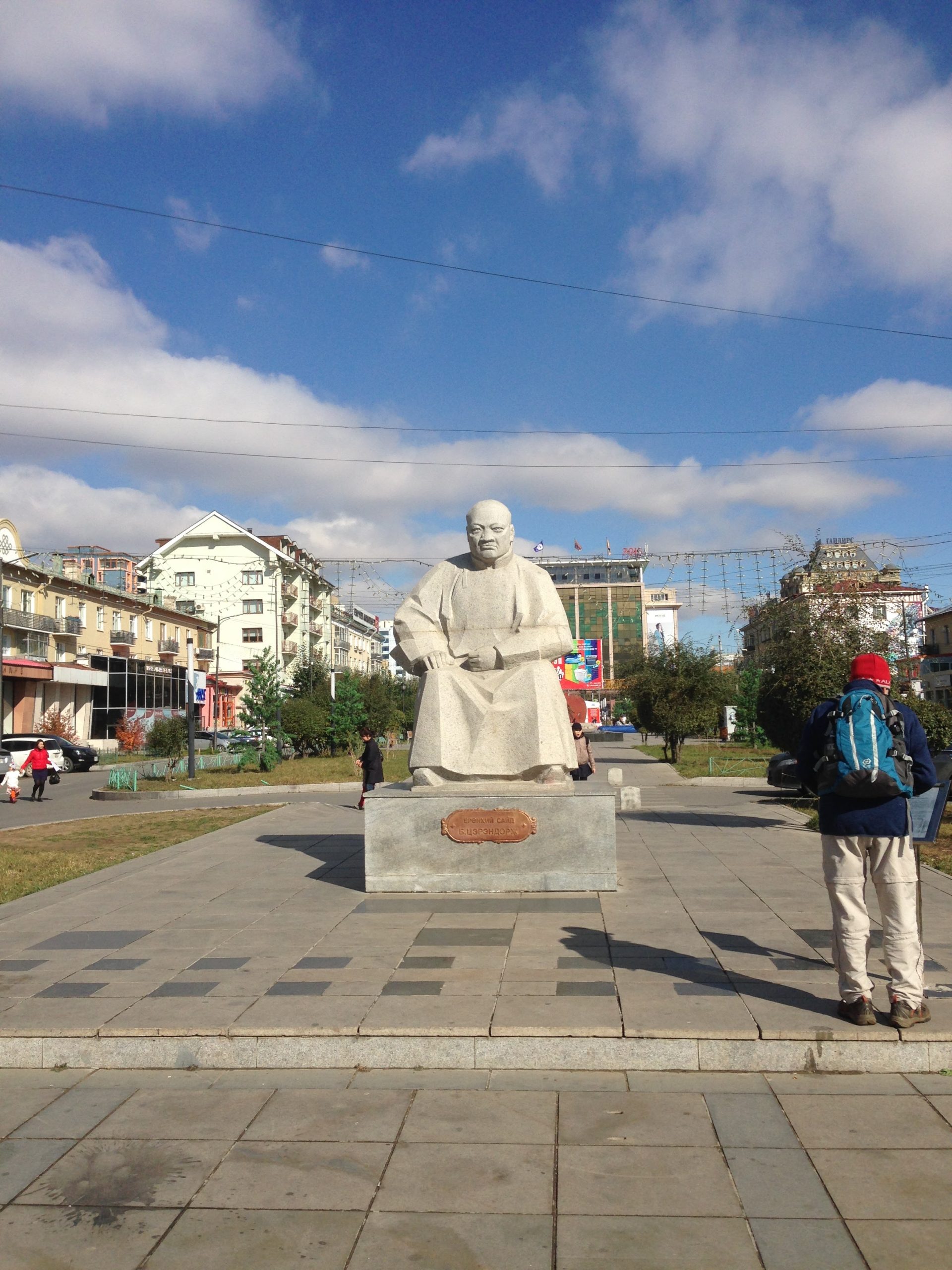
I cannot remember the last time I saw a blue quite this vivid.The Raw Symphony of a Foreign City
I wandered past faded signboards painted in a Cyrillic alphabet I couldn’t read. The sidewalks were charmingly uneven, forcing a slower, more deliberate pace. Cars rumbled past, their gruff, impatient horns echoing against the concrete. Out of habit, I reached into my bag for my noise-canceling earphones, but I paused. I let them drop back into the canvas pocket. There was a strange rhythm to the raw, unfiltered noise of this unfamiliar city, and for a traveler who usually hides behind a playlist, the clamor felt surprisingly welcoming.

As I let the city guide my feet, I stumbled upon a sign that made me pause: ‘SEOUL STREET’. To fly thousands of miles across the Asian continent only to end up on a street named after my own capital city felt like a gentle cosmic joke. Looking at a bronze statue resting peacefully in the square, a soft laugh escaped me. I am wandering alone, but in this sprawling Mongolian metropolis, I suddenly felt tethered to something familiar.
Golden Roofs and Spinning Wheels
My aimless walk eventually drew me upward to the city’s highest spiritual point: the Gandan Monastery. As I crested the hill, the golden, sweeping roofs of the temple grounds pierced the icy blue sky, creating a color contrast so sharp it almost hurt the eyes.

The wind chimes rang out, naturally slowing my eager footsteps.In the sweeping courtyard stood a massive, crimson Mani wheel—a traditional Tibetan Buddhist prayer wheel—towering well over my head. A group of local children in neat school uniforms were giggling joyfully, throwing their entire body weight against the heavy wooden cylinder to make it spin.

Prayers or simply playtime? Either way, the afternoon sun blessed their backs.Though they spoke no English, their rhythmic pushing felt like a universal chant of “heave-ho!” Following their lead, I stepped forward and gently placed my hand on the wheel. The rough, ancient texture of the wood met my palm. With every heavy rotation, I felt the lingering anxieties about my impending desert expedition scatter into the cold mountain breeze.
Drawn by the thick, earthy scent of burning incense, I slipped inside one of the main prayer halls. Amidst the solemn chanting, I locked eyes with a tiny, golden angel. It was a baby wrapped in a beautifully ornate traditional deel, held safely in his father’s arms. Despite the serious religious ceremony echoing around us, the child’s wide, curious eyes were entirely focused on the strange foreigner standing in the shadows.

In that fleeting second of eye contact, the world's noise simply vanished.We shared no language, but we didn’t need one. I held the child’s gaze and offered a slow, respectful nod to the parents. The father returned it with a brilliant, toothy smile. That simple gesture of human warmth was all it took. A profound wave of relief washed over me; I was a stranger here, yet I was undeniably welcome.
A Timid Traveler’s Lunch
Later, I ducked into a bustling local eatery, eager for warmth. However, my heart skipped a beat for a completely different reason when I opened the menu.

There it was, listed plainly: ‘Sheep’s head’, accompanied by an incredibly graphic photograph of a boiled skull resting on a platter. The adventurous spirit of this traveler instantly evaporated. (I’m sorry, Mongolia, but I am not quite ready for this level of intimacy…) I hastily flipped to the next page and pointed at a comforting, familiar-looking bowl of hot meat noodle soup.

My safe compromise. On a crisp autumn day, hot broth is the only right answer.As I silently slurped my steaming noodles, a sudden commotion broke out. I looked up to see a full film crew navigating the narrow aisles, led by a burly camera director sporting a classic Western cowboy hat. As they filmed the locals enjoying their everyday meals, I realized I had inadvertently slipped into the background of someone else’s cinematic story.

A cowboy director filming my lunch? For a second, I felt like an extra in an indie film.Stepping back out onto the street, the late afternoon wind bit at my cheeks. I pulled my jacket collar tight as I walked back to my guesthouse.

The iconic Furgon van waiting to brave the dirt roads. The real adventure begins tomorrow.Tomorrow, I will bid farewell to the paved roads, hot soups, and gentle comforts of Ulaanbaatar. But thanks to the warm smiles, the spinning wheels, and the delightful, unscripted moments of today, I feel surprisingly ready. Bring on the wild, untamed roads of the Gobi.
The Timid Traveler’s Guide to Ulaanbaatar
If you’re planning a quiet escape to Mongolia’s capital, here are a few practical observations from my notebook to yours:
📍 Navigating Gandan Monastery & The City
- Getting Around: The monastery is a peaceful 20 to 30-minute walk from the central Sukhbaatar Square. If you prefer to ride, download the UBCab app. It works exactly like Uber, ensuring you get safe, metered rides without having to haggle over fares in a foreign language.
- Time Needed: Give yourself a slow 1 to 1.5 hours to wander the temple grounds.
- Costs & Etiquette: Strolling the outdoor courtyards is completely free. Entering the main hall to see the giant Avalokiteshvara statue costs a nominal 4,000 Tugrik (MNT).
- Photography Rule: Taking photos of the indoor statues is strictly monitored; you will usually need to pay a special fee ($5–$10 USD) for a camera permit. Also, remember to always spin the prayer wheels clockwise out of respect for Buddhist traditions.
🥣 Dining Like a Local
- Menu Decoding: Mongolian menus are highly visual with lots of pictures. If you are highly sensitive to the strong, gamey scent of local mutton, be sure to actively look for the words ‘Beef’ or ‘Chicken’ instead.
- Traveler’s Recommendation: For chilly autumn days, order a hot meat broth. If you want a hearty, universally beloved local dish, try Tsuivan (Mongolian stir-fried noodles with meat and vegetables).
- Portion Warning: Mongolian hospitality is generous! One dish is often equivalent to 1.5 portions back home. If you want a light meal, one entrée is more than enough.
🧥 Packing for Autumn (Late Sept – Early Oct)
- The Weather: The Mongolian autumn is a season of extremes. The midday sun is intensely warm, but the moment you step into the shade, the air is biting. By nightfall, temperatures frequently plummet below freezing.
- Essential Gear: * Layers: Thin, long-sleeved shirts that you can easily take off or put on.
- Outerwear: A packable, lightweight puffer jacket is an absolute non-negotiable survival tool.
- Accessories: Comfortable walking shoes for the bumpy sidewalks, and a good pair of sunglasses to shield your eyes from the glaring high-altitude sun.
As a traveler who speaks primarily through my camera lens, I’d love to know what visual detail from Ulaanbaatar stood out to you the most! Was it the golden roofs, the little baby in the temple, or perhaps the intimidating menu? Leave a comment below, and if you enjoyed this quiet stroll, I warmly invite you to explore my other travel essays and photography galleries right here on the blog.

Leave a Reply