Stepping into the Glory of Lisbon
The Lisbon sun was exceptionally scorching, but the moment I stepped into the shade, the cool Atlantic breeze dried my sweat. Even without borrowing the grandiose historical title of the Age of Discovery, the Belém district of Lisbon felt like one giant open-air museum. Among all the incredible sights, the place that held my footsteps the longest was the spectacular Jerónimos Monastery (Mosteiro dos Jerónimos). This monumental structure is a testament to Portugal’s rich maritime history and architectural brilliance.
Riding Tram 15 to the Scene of History
In downtown Lisbon, near the bustling Praça do Comércio, I boarded Tram 15E. Through the rattling windows of the vintage tram, the beautiful Tagus River (Rio Tejo) shimmered brilliantly under the sun. While you can take a bus or tram from the city center like Rossio or Figueira, riding Tram 15 along the riverside carries a romance of its own. After about a twenty-minute ride, as soon as I got off at the Mosteiro dos Jerónimos stop, an overwhelming white stone structure completely filled my panoramic view.
Splendor Carved in Stone: The South Façade
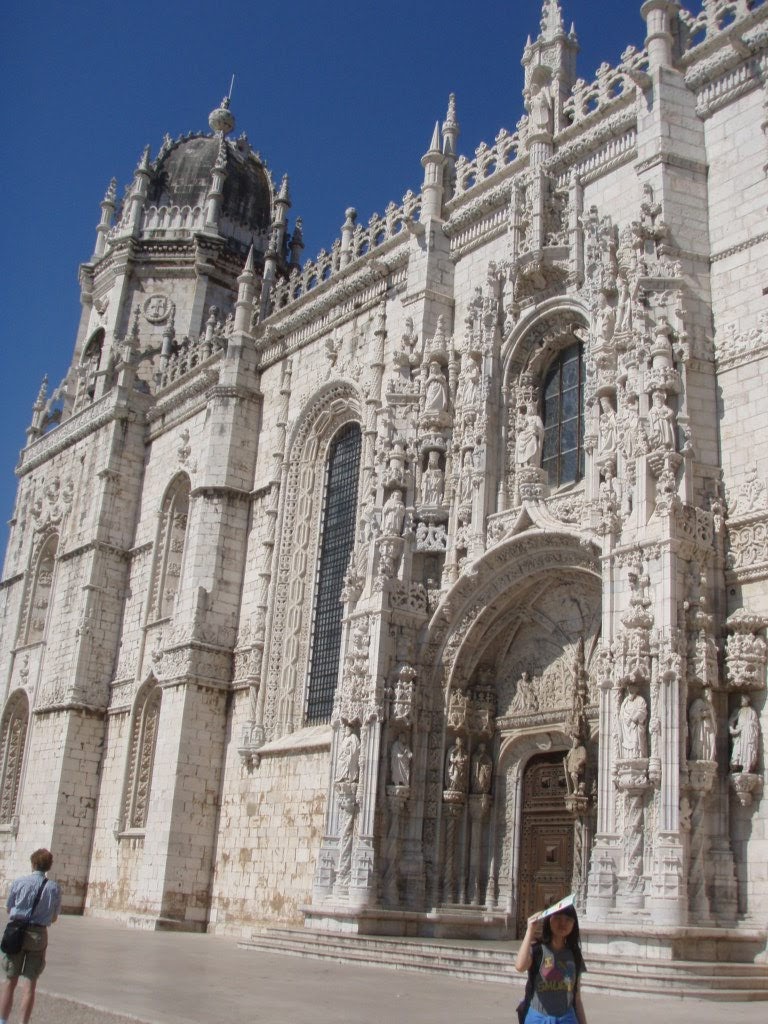
Before heading to the main entrance, what stopped me first was the breathtaking South Façade. It was clearly made of heavy stone, yet it looked as delicate as lace meticulously woven from fine thread. This is said to be the absolute essence of the Manueline style, a unique Portuguese architectural form celebrating the era of maritime exploration. Above the door, intricately carved with maritime motifs like the sea, ropes, and coral, a statue of the Virgin Mary looked down gracefully.
Capturing the Golden Limestone Grandeur
The statue of the Virgin Mary was protected by magnificent statues of saints surrounding her. The texture of the ancient limestone, glowing golden in the hot afternoon sun, possessed a profound grandeur that photographs simply could not fully capture. I spent a long time looking up, trying to capture every single detail until my neck grew stiff. The devotion poured into these carvings centuries ago still resonates powerfully with every visitor who stands before this masterpiece today.
Santa Maria Church: A Divine Moment
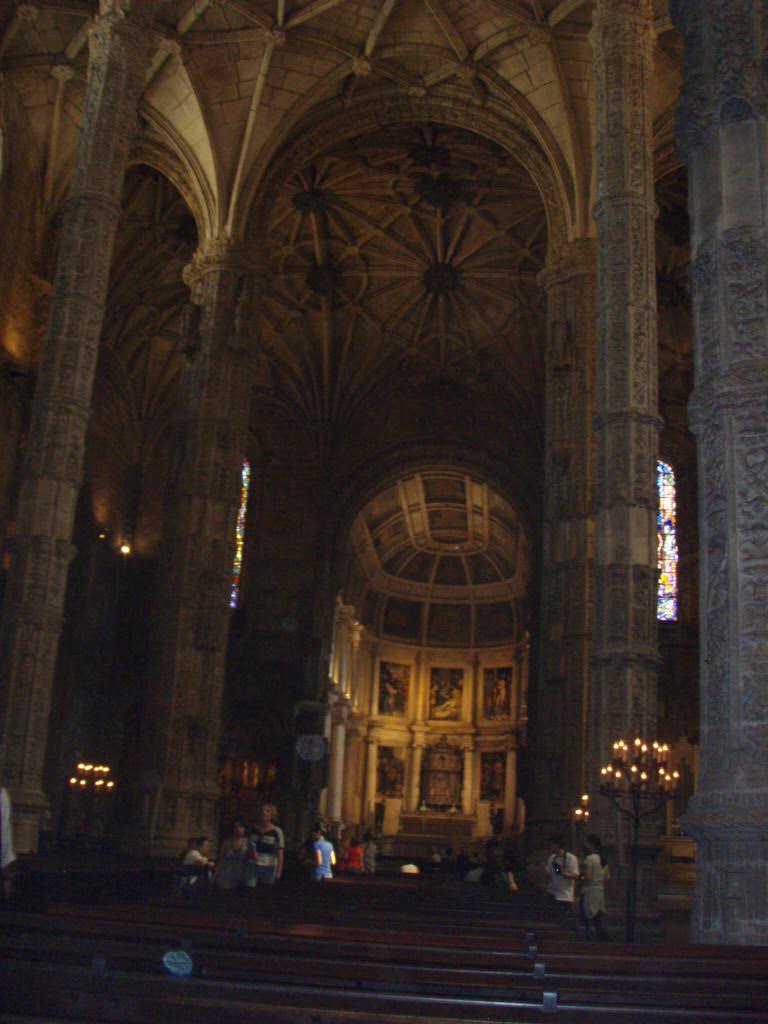
Entering the Santa Maria Church through the entrance next to the South Portal, the outside noise vanished instantly, replaced by a cool, solemn air wrapping around me. The first thing that caught my eye were the towering pillars that seemed to support the very sky. Massive columns resembling tall palm trees stretched up to the ceiling, forming a magnificent vaulted ceiling, making me feel as if I had entered a giant, enchanted stone forest far removed from the bustling city outside.
The Golden Pipe Organ and High Choir
Looking toward the majestic altar, something immediately stole my gaze: the golden pipe organ. Even in the dim interior lighting, its splendid form was brightly shining. Imagining the resounding sound of that organ accompanying countless desperate prayers over the ages, I moved my feet and stopped near the High Choir on the second floor. The sheer scale of the church interior is humbling, forcing you to reflect on the immense faith and wealth that built this enduring sanctuary.
The Harmony of Heavenly Light and Shadow
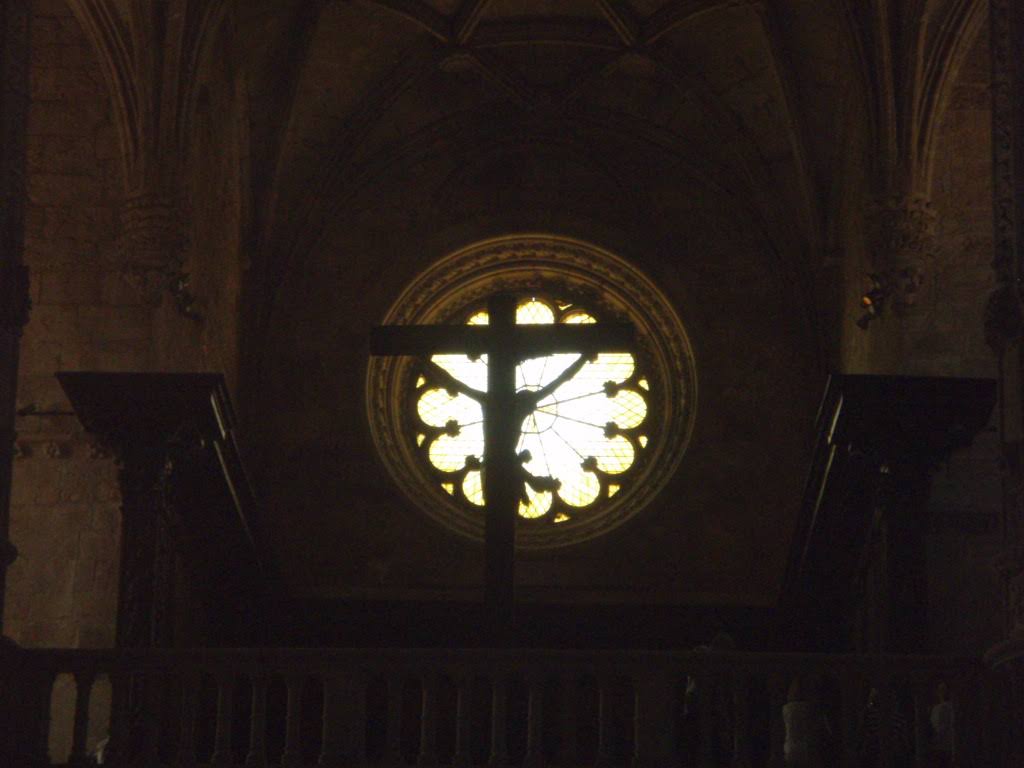
Intense, colorful light was pouring in through the round stained glass Rose Window that illuminated the dark, quiet interior. In the center of that light stood a giant, imposing crucifix. It felt as if the stained glass existed solely to be a radiant halo for the cross. The cross, with its back to the brilliant light, became a striking black silhouette casting a holy shadow on the floor, while mysterious beams of yellow and white light enveloped the surrounding ancient stones.
Echoes of Prayers from the Age of Discovery
In that magical moment, the cold stone space seemed to fill with an undeniable divine energy. The desperate prayers for the safe return of brave sailors departing for the unforgiving sea centuries ago must have reached the heavens through this very light. This harmonious play of light and shadow, more powerful than any ornate sculpture or precious treasure, delivered a deep emotion beyond words. I stood there for a long time, quietly gazing at the light with a truly reverent heart.
The Cloister: Where Literature and Cinema Flow
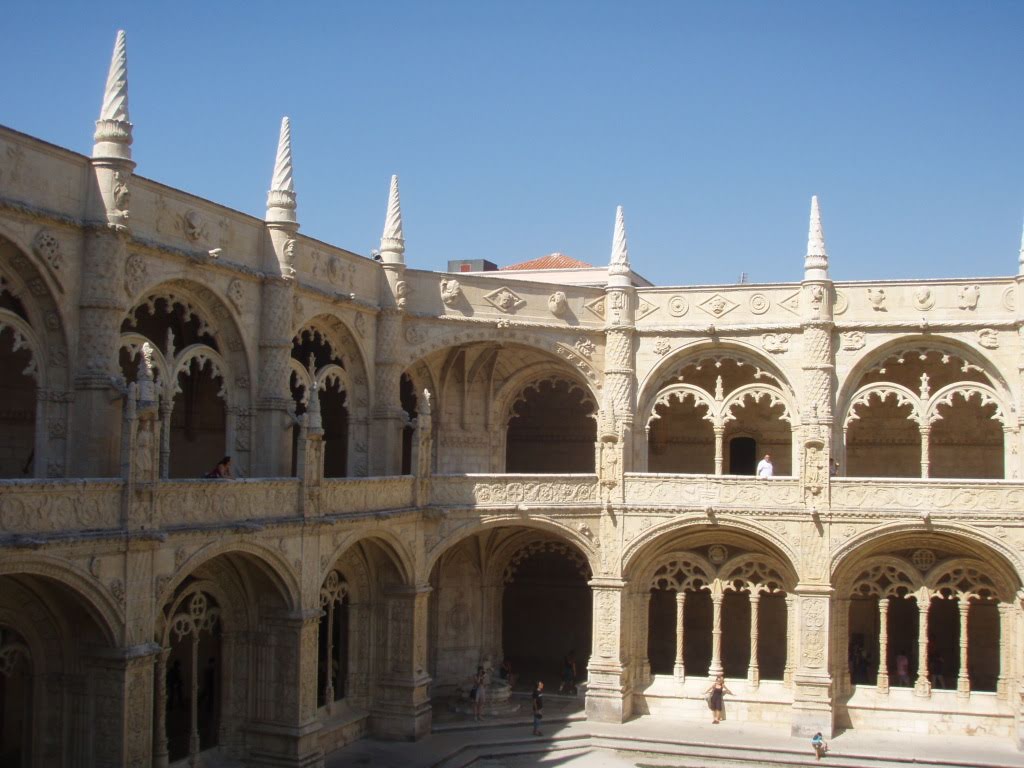
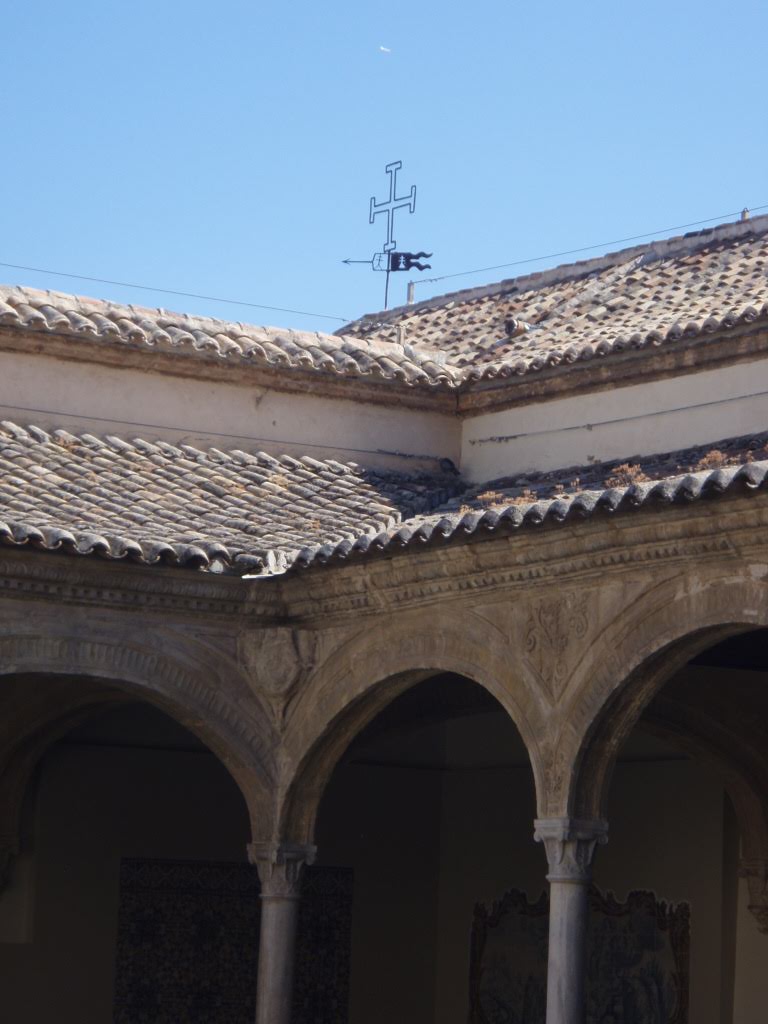
Leaving the quiet church behind, I moved to the monastery’s tranquil courtyard, the Cloister. This is arguably the absolute highlight of the entire Jerónimos Monastery experience. The expansive two-story cloister elegantly surrounds the green garden in a perfect square shape, and the ornate details carved into every single arch were goosebump-inducingly exquisite. It is a masterpiece of design that perfectly blends spiritual reflection with unparalleled artistic achievement in the heart of Lisbon.
The Peak of Manueline Extravagance
In particular, the pointed spires and the graceful curves of the arches, which cleverly looked like twisted maritime ropes, showed the absolute peak of Manueline extravagance. Walking through this remarkably quiet cloister, the famous movie “Night Train to Lisbon” naturally came to my mind. The protagonist, Gregorius, who left his boring daily life behind to follow a mysterious book to Lisbon. His journey of rediscovering the meaning of life strangely resembled the profound silence of this monastery.
Meeting Fernando Pessoa in the Silence
Just like the memorable line from the movie, “If we leave a part of ourselves behind in the places we leave, can we find ourselves again when we return?”—this philosophical question seemed to linger between the ancient pillars of the cloister. In fact, Fernando Pessoa, the great and melancholic poet born in Portugal, rests eternally right here in this monastery. Standing before the solemn tomb of the man who famously said, “My homeland is the Portuguese language,” I felt a fateful attraction.
A Space of Contemplation and Timeless Travel
The fact that the soul of a man who wished to live various lives through numerous heteronyms is taking eternal rest alongside this historic monastery, which harbored the daring dreams of the Age of Discovery, touched my heart deeply. The cloister was not just a building; it was a vast space of contemplation. Leaving the Jerónimos Monastery, I felt a sentence engraved in my heart: Travel is the process of meeting the lost “me” again in unfamiliar landscapes.
Practical Tips for Your Lisbon Visit
If you are planning a visit, take Tram 15E from downtown Lisbon and get off at the Mosteiro dos Jerónimos stop. Be sure to look for Fernando Pessoa’s tomb near the entrance to the cloister and Vasco da Gama’s sarcophagus near the church entrance. For a perfect foodie experience afterward, grab some famous Egg Tarts (Pastéis de Belém). The “Eat-in” line moves relatively quickly, so I highly recommend eating in the café with a warm “Galão” (Portuguese latte) or espresso.
 timid travelers
Leave a comment